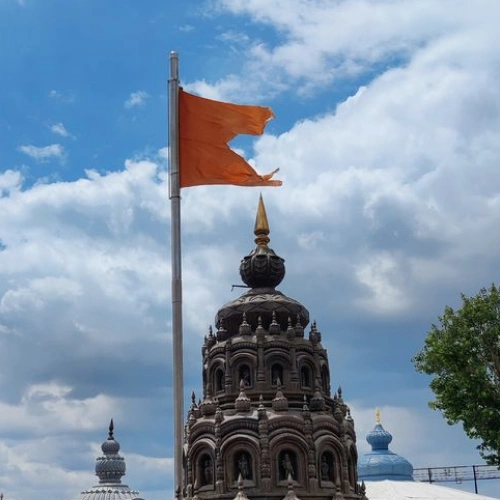
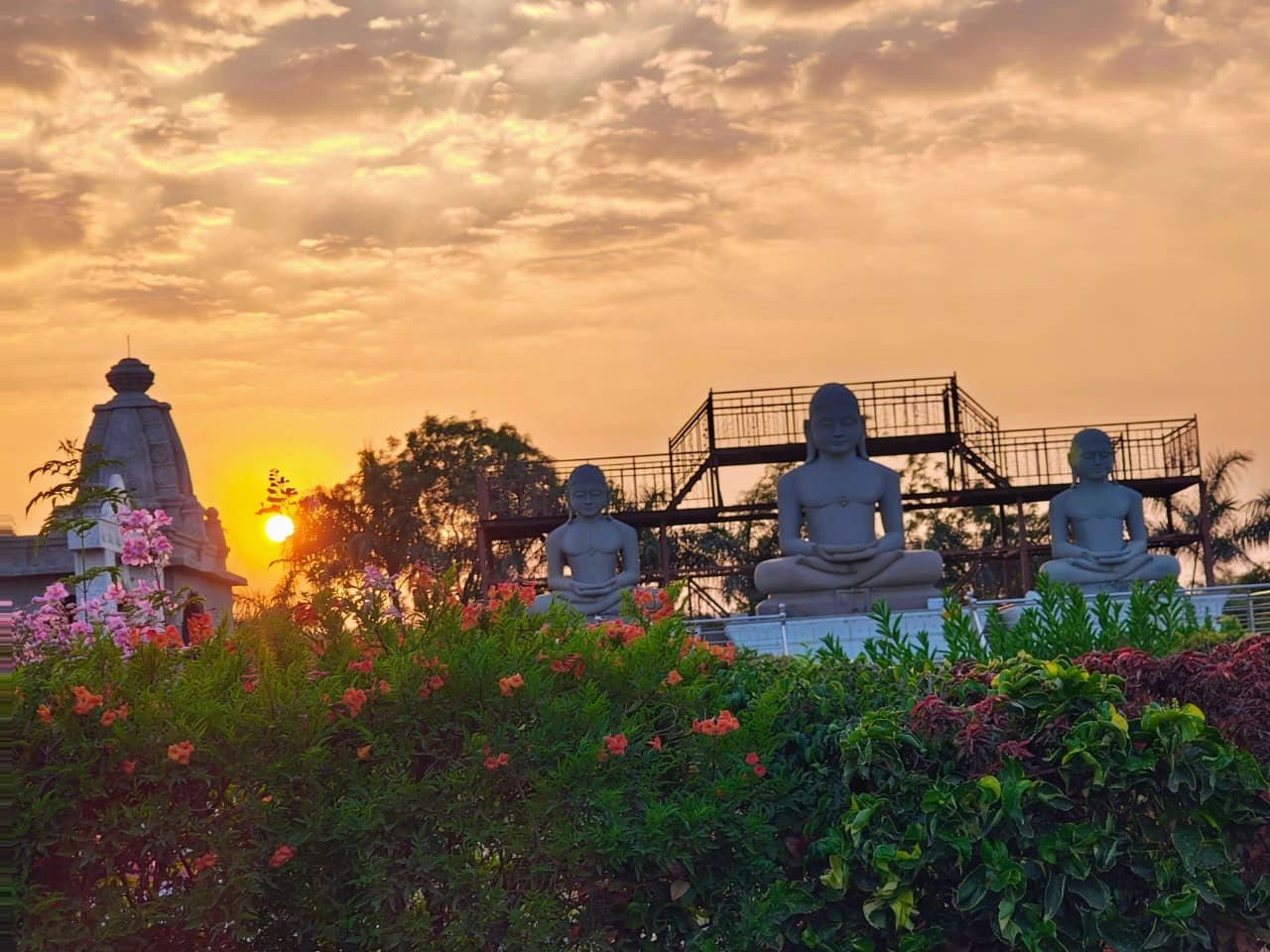
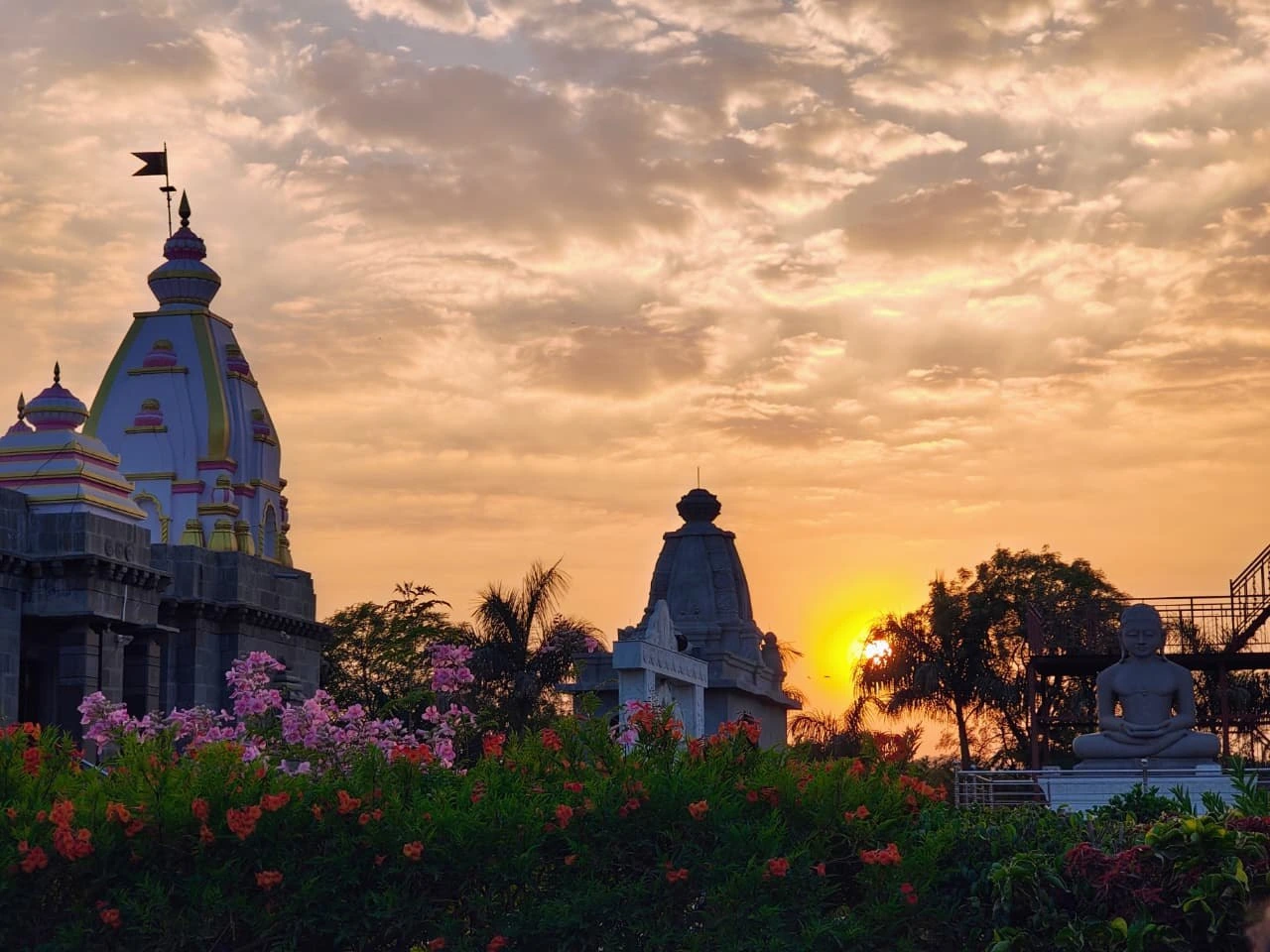
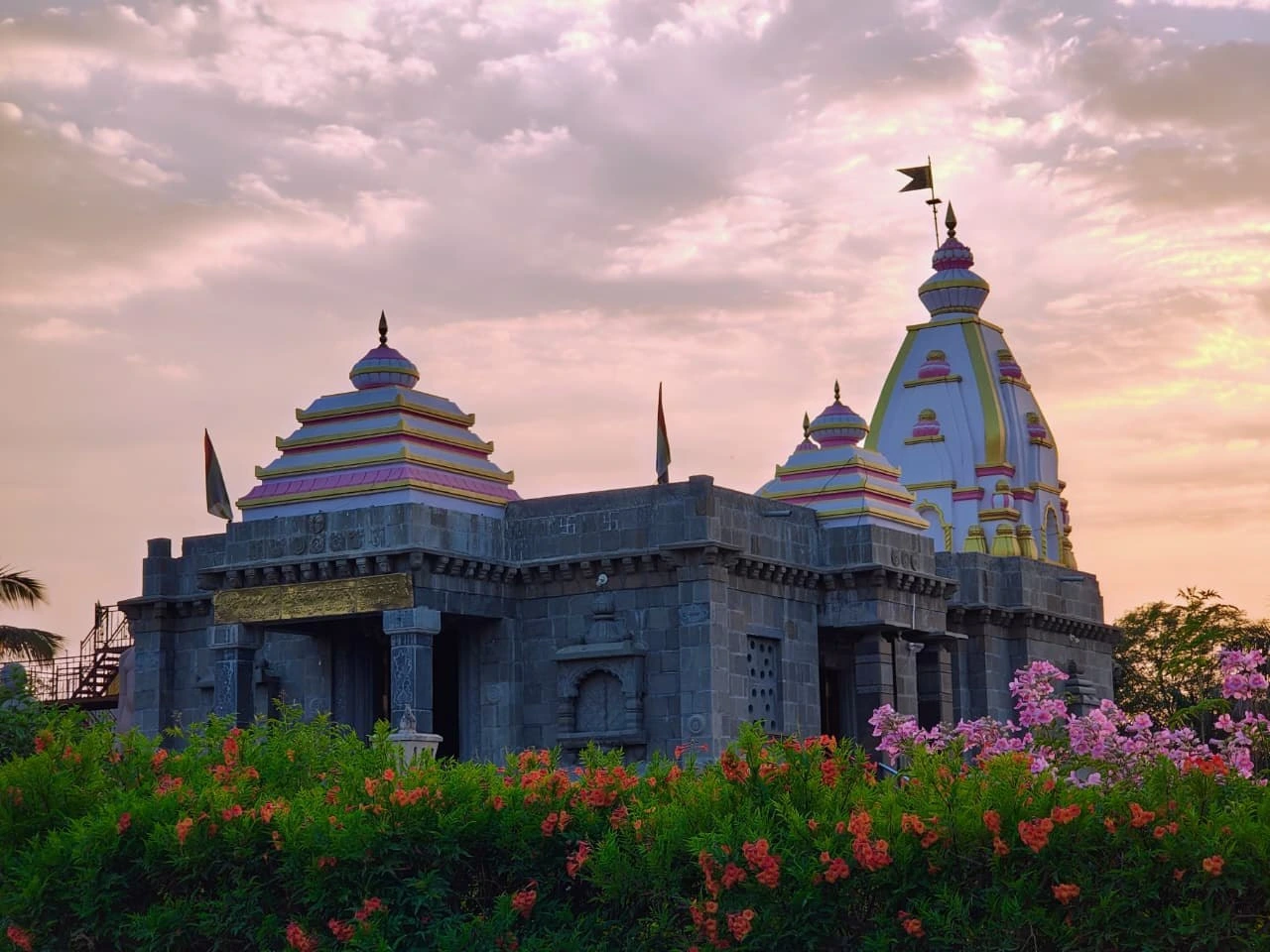
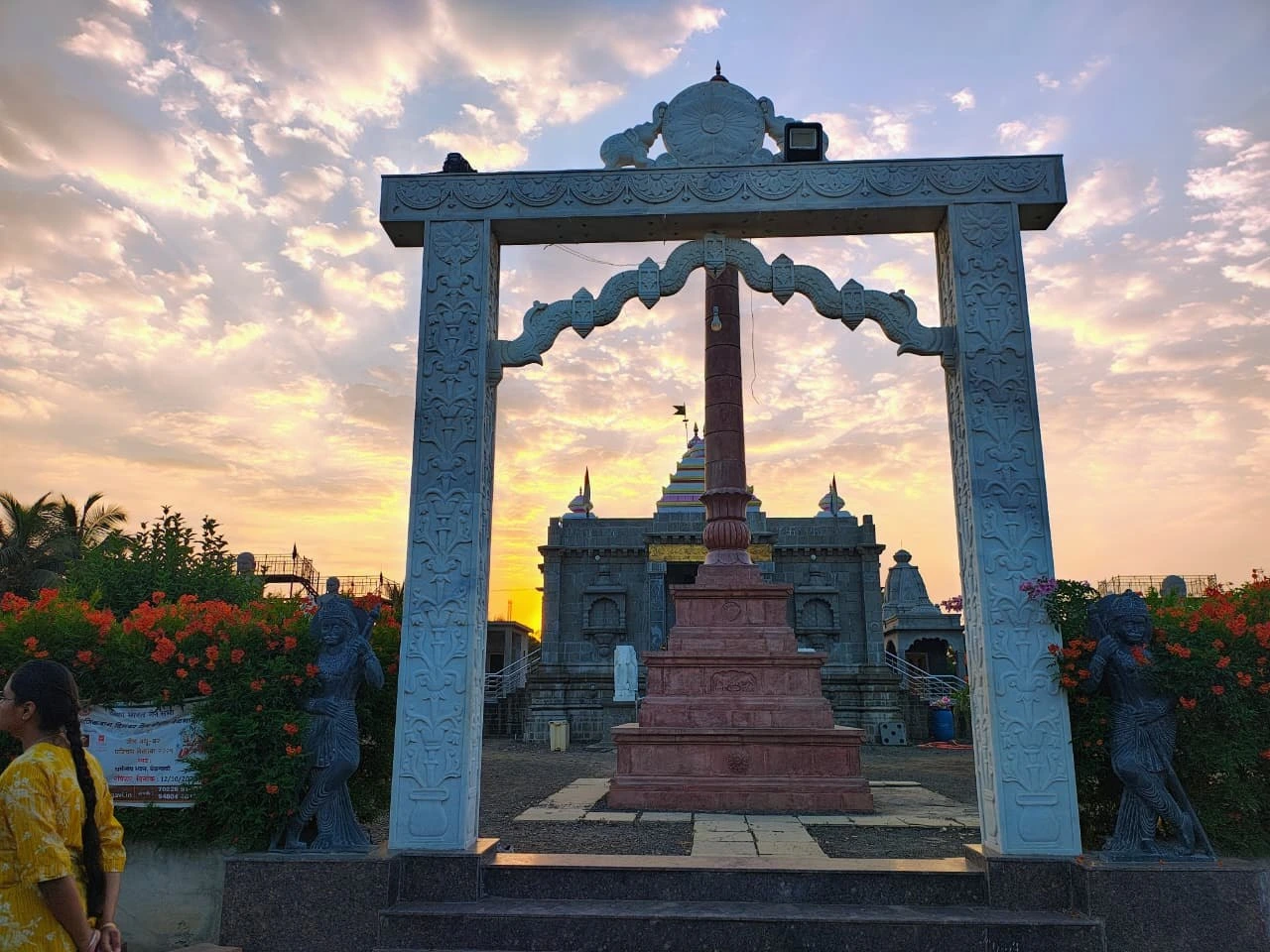
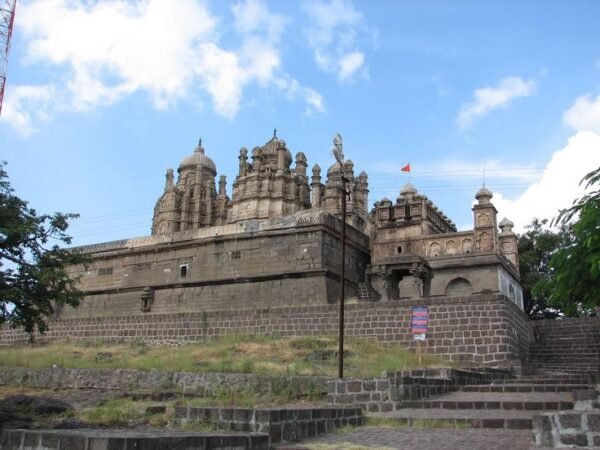
Bhagwan Parshwanath Digambar Jain Atishaya Kshetra in Kognoli (Ratnatraypuram, Kanganpur) is a modern‑but‑historically rooted Digambar Jain pilgrimage site in Sangli district, Maharashtra, built around a rare 11th‑century idol of Lord Parshwanath that once stood in a Jain‑feudal lord’s temple under the Ingleshwar kings. The surrounding Kognoli‑Kangnoli area of Kavathemahankal taluka shows historic traces of Jain feudal dominance, but over time the local Jain community migrated away, leaving behind buried or hidden temples and idols; the Parshwanath image itself carries a Kannada inscription which scholars interpret as evidence that it was installed in a Jain‑feudal‑lord temple during the 11th century. In the 20th century, the idol was first kept in the village’s Hanuman temple, jointly cared for by local villagers and Jain devotees from outside, until the villagers insisted that the murti should remain in their village, prompting the decision to create a dedicated Digambar Jain Atishaya Kshetra right in Kognoli. A trust was formally registered in 1986 and, under the guidance of Tyagi monks, devotees decided to construct a Hemadpanthi‑style temple that echoes the ancient character of the idol, first housing the murti in a temporary shed‑like structure with regular nityapuja and abhishek, then gradually developing the full complex. After decades of phased work, the ancient Parshwanath idol was re‑enshrined on its throne in the new temple on 6 February 2017. The site was expanded with a shikhar (spire), manastambha, Sabha Mandap, Muni Niwas, Muni Ahargriha, Yatri Niwas (pilgrim accommodation), Nayanmanohar Bagicha (landscaped garden), large Ratnatraya‑era installation, and shrines for other Tirthankaras such as Bhagwan Munisuvratanath. The kshetra is now regarded as an “Atishaya Kshetra” (place of miracles) because many devotees report that prayers here are powerfully answered, especially for relief from troubles, health issues, and spiritual upliftment. The site is used as a hub for Jain discourses, Mangi‑Tungi‑style visits by monks, and major festivals like Parshwanath Jayanti, Mahavir Jayanti, and Paryushanas.
Ancient idol of Bhagwan Parshwanath with 11th‑century Kannada inscription, originally from a Jain‑feudal‑lord temple.
Atishaya Kshetra status – regarded as a place of miracles and strong spiritual energy.
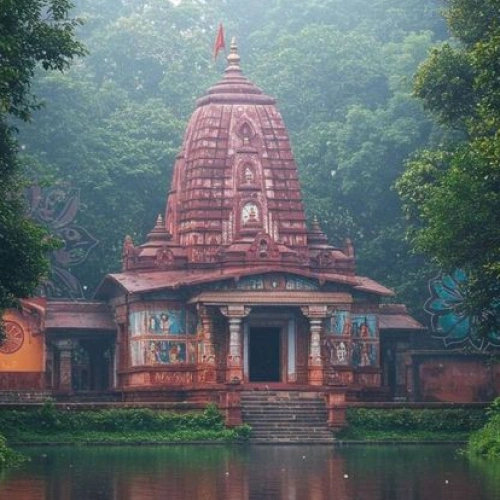
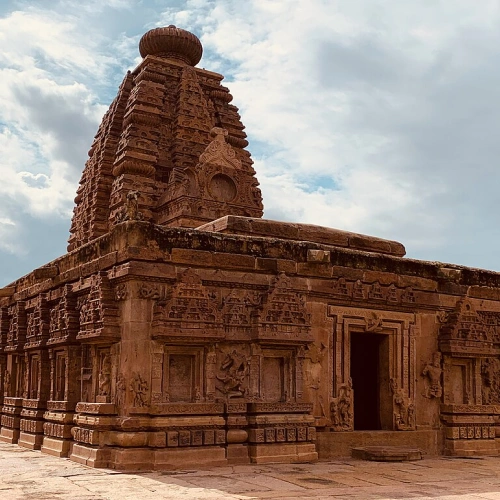
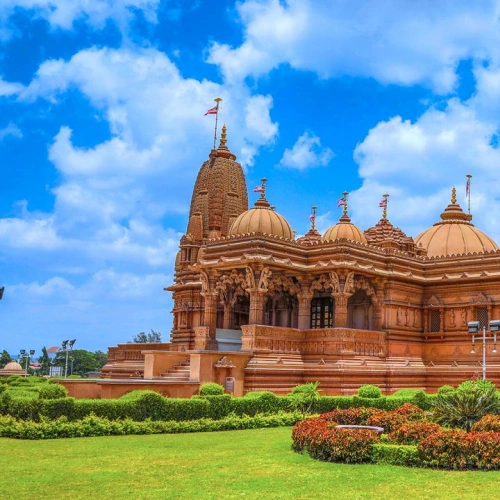
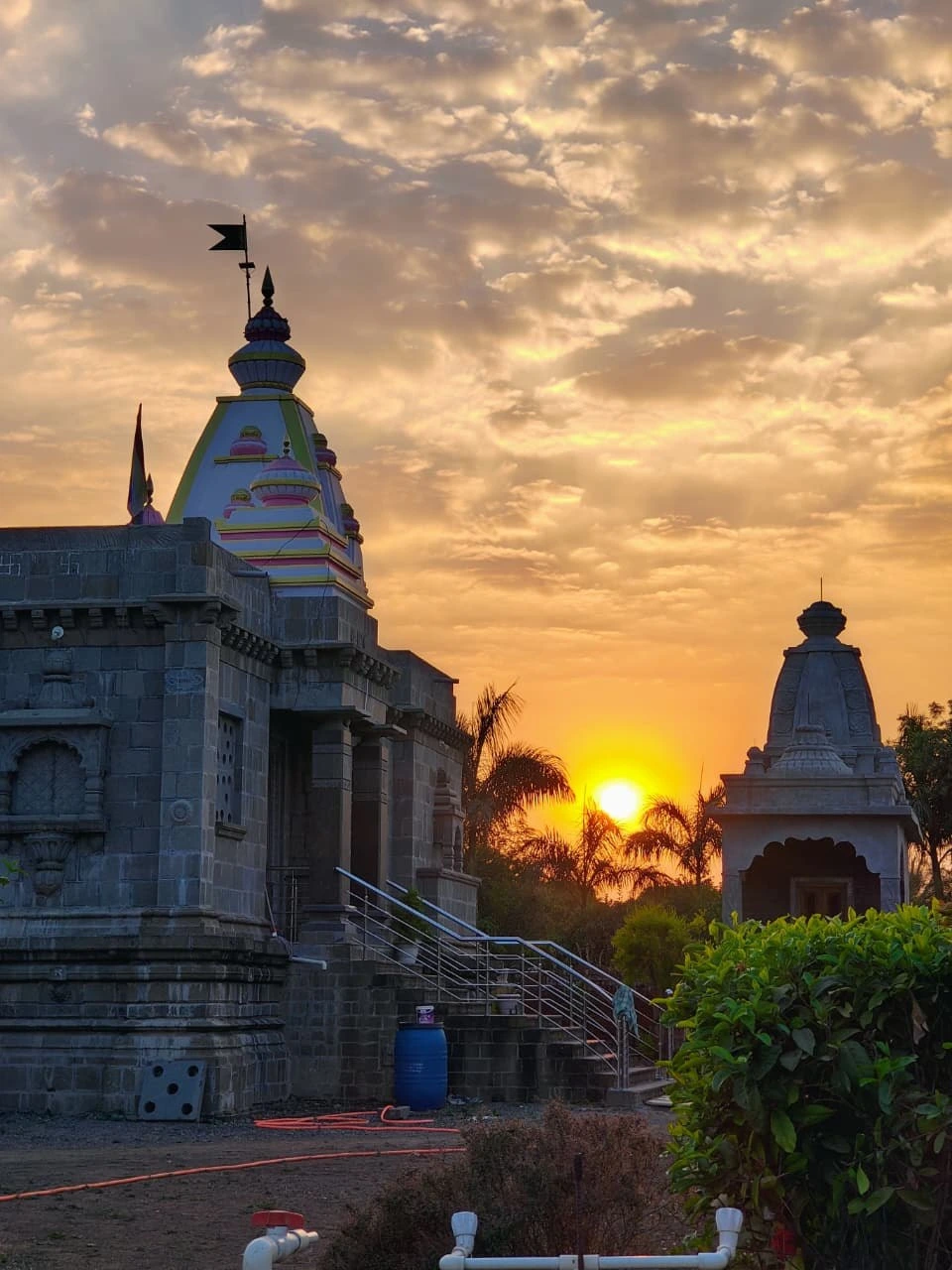
Hemadpanthi‑style Digambar temple built to match the character of the medieval idol.
Monastic infrastructure: Muni Niwas, Muni Ahargriha, Sabha Mandap, and regular visits by monks.
Pilgrim facilities: Yatri Niwas (guest‑house), temple pond‑like water area, and Nayanmanohar Bagicha (garden) for meditation and leisure.
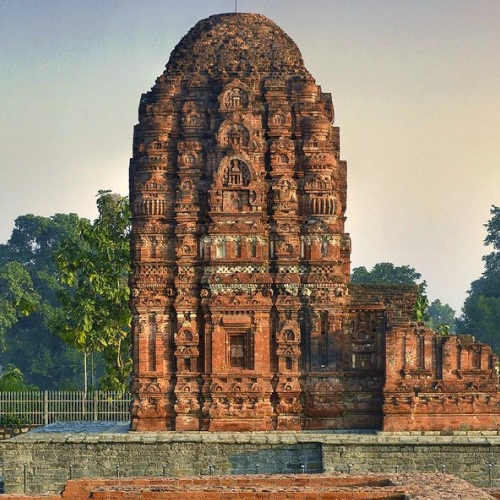
Historical backdrop of Jain feudal‑lord dominance in medieval Sangli‑Kavathemahankal region, even though there are no resident Jain families in Kognoli today.
Includes/Excludes
Regular nityapuja and abhishek of the main Parshwanath idol.
Main shrine of Bhagwan Parshwanath in a Hemadpanthi‑style garbhagriha with shikhar.
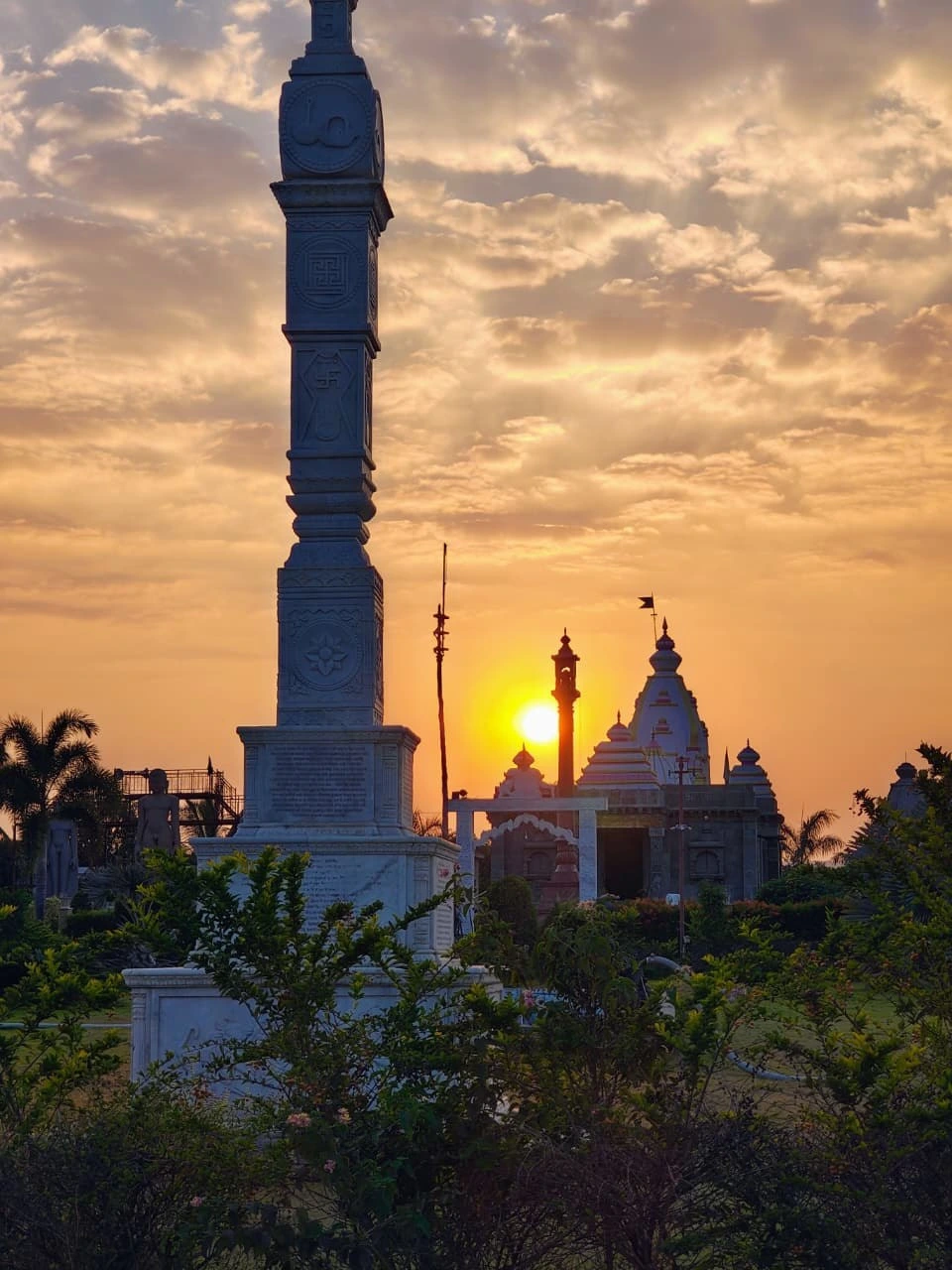
Manastambha, Sabha Mandap, Yatri Niwas, Muni Niwas and Muni Ahargriha, allowing stay and discourse‑based gatherings.
Nayanmanohar Bagicha and other landscaped areas for quiet contemplation.
Large Ratnatraya‑era murti / installation and subsidiary shrines for other Tirthankaras such as Bhagwan Munisuvratanath.
Festival and festival‑related events such as Parshwanath Jayanti, Mahavir Jayanti and Paryushan‑camp‑style discourses.
Non‑Jain deities or mixed‑faith worship – this is a strictly Digambar Jain site, not a multi‑religion or “popular‑folk” temple.
Residential Jain community – there are no Jain households in Kognoli itself, so the regular worship is maintained by visiting devotees and monks.
Ancient full‑temple structure from the 11th century, only the idol and its inscription are medieval; the current buildings are late‑20th–21st‑century constructions.
Major commercial market or heavy tourist‑only infrastructure, emphasis is on spiritual and pilgrimage use rather than mass tourism or shopping.
Start from Kavathemahankal, the taluka‑seat surrounded by medieval Jain‑feudal history. From here the road to Kognoli opens the landscape of old Jain‑lord estates.
Sulgare Railway Station (on Kognoli–Sulgare road)
Land‑route pilgrims often pass Sulgare, a small station near where the Atishaya Kshetra land was purchased in the 1980s.
Kognoli Village Centre
Kognoli lies in Jain‑feudal‑dominated Kavathemahankal taluka, though no Jain families remain here today; the temple stands as a living memory of that era.
The heart‑point of the journey: the recently constructed Hemadpanthi‑style Atishaya Kshetra housing the ancient Parshwanath idol.
Heritage Map
Frequently asked questions
What is an Atishaya Kshetra, and why is this one called that?
An Atishaya Kshetra is a Jain pilgrimage site believed to be a “place of miracles” where devotees feel especially strong spiritual energy. This kshetra is called Atishaya Kshetra because many visitors report fulfilled wishes, relief from troubles, and deep peace after worship at the ancient Parshwanath idol.
Is there a Jain community living in Kognoli village?
No; there are currently no Jain households in Kognoli, though historical evidence shows the area was once dominated by Jain‑feudal‑lords. The temple is maintained by visiting Jain devotees and monks from nearby towns.
How old is the Parshwanath idol in this temple?
The main idol is believed to date back to the 11th century, with a Kannada inscription indicating it was originally installed in a Jain‑feudal‑lord temple under the Ingleshwar kings. The current Hemadpanthi‑style temple was built around it in the late 20th and early 21st century.
What is the best time of year to visit for a spiritual experience?
Devotees often choose major Jain festivals like Parshwanath Jayanti and Paryushan for a deeper experience, when monks visit, discourses are held, and the atmosphere is intensely devotional. For quieter darshan, early‑morning visits on regular days are recommended.
Are there any special rituals or offerings conducted here?
The temple conducts daily nityapuja and abhishek of the Parshwanath idol, regular artis, and occasional Mangi‑Tungi‑style monk‑visits and lectures. Pilgrims may offer simple puja items, candles, and Prasad as per Jain‑temple rules.
Is there accommodation for devotees who wish to stay overnight?
Yes; the complex includes Yatri Niwas (pilgrim accommodation) for devotees who wish to stay for multiple days, especially during festivals or extended meditation.
Are there any entry charges or strict timings?
The temple is generally open to all and does not charge an entry fee; timings are roughly 5:30 AM – 11:30 AM and 5:30 PM – 8:30 PM, though exact hours may vary slightly by season.
Is this site suitable for non‑Jains who wish to learn about Jain heritage?
Yes; the kshetra welcomes visitors interested in Jain history, architecture, and philosophy. Visitors are expected to follow basic Jain‑temple etiquette: remove shoes, maintain silence, and avoid non‑vegetarian food within the complex.
Maintain Discipline
Avoid Loud Noises
Keep noise levels low to maintain peaceful atmosphere.
Dress Traditionally & Modestly
Wear traditional traditional attires. Avoid sleeveless, short, tight, or revealing clothes out of respect.
Follow Pathways
Keep noise levels low to maintain peaceful atmosphere.
Maintain Hygeine
Keep the site tidy by disposing of waste properly
No Smoking
Smoking is prohibited to protect the environment and health.
Selective Photography
Photography allowed only in permitted areas, no flash.
Use Designated Parking
Park only in designated areas to avoid disturbance.
Any concerns regarding the details? Message us to correct it.